

- Winter respiratory illnesses can be more serious for older adults.
- The guide covers warning signs, vaccines, practical protection and how home care helps.
As autumn arrives in the UK, many families start asking the same questions: How dangerous are colds and flu for my mum or dad? Is COVID-19 still a big risk for older adults? Which vaccines are offered this year and to whom?
This guide brings together clear, practical advice for families caring for older loved ones: what to watch for, what actually helps, and how to reduce risks at home and in the community.
Why winter respiratory illnesses hit older adults harder
Ageing affects the immune system (a process often called immunosenescence), making it harder to fight infections and easier for a mild illness to tip into something more serious like pneumonia or a worsening of existing conditions (COPD, heart disease, diabetes). UK health briefings show that, compared with recent years, flu hospitalisations reached record levels in 2024–25, even as COVID-19 admissions and deaths were lower than earlier in the pandemic. RSV also remains an important cause of hospitalisation in both young children and older adults.
Across a typical year, respiratory infections contribute to a significant share of deaths in England and Wales, with influenza or pneumonia cited on around 1 in 9 death registrations in some weeks of 2025; COVID-19 currently accounts for a smaller proportion but still poses a serious risk for the oldest age groups and those with weakened immunity.
COVID-19 risk now: who’s most vulnerable in 2025?
Today, most people have some immunity (from vaccination, infection, or both), but severe COVID-19 is still concentrated in older adults, particularly those aged 75+ and people who are immunosuppressed or living in care homes. That’s why autumn booster policies are targeted to these groups.
Clinical guidance also continues to show risk rises with age and with certain long-term conditions (e.g., chronic heart, lung, kidney disease; diabetes; obesity), and is highest in residents of long-term care settings.
Good news: Treatments work. Antivirals (e.g., nirmatrelvir/ritonavir a.k.a. Paxlovid) have shown the greatest benefit in older patients when given early after a positive test, reducing hospitalisation and death in real-world studies. (Your clinician will check eligibility and interactions.)
Flu in older adults: not “just a bad cold”
Flu can move fast in older people and is far more likely to cause bronchitis, pneumonia, dehydration, delirium and hospital admission. The UK’s 2024–25 season saw higher ICU/HDU admission rates and thousands of influenza-attributable excess deaths—a reminder that annual vaccination matters.
NHS and UKHSA advise the best time for a flu jab is autumn before the peak (often December–January), with vaccination offered from October and continuing through winter. It’s still worth getting vaccinated later in the season if you missed the early window.
What about “just a cold”?
For a fit, younger person, a cold is usually mild. For an older adult, even a “simple” cold can trigger a flare-up of chronic conditions (like COPD or heart failure), increase the risk of secondary bacterial infections, and lead to falls if it causes dizziness or dehydration. That’s why early symptom management and keeping a close eye on changes in breathing, confusion, or appetite are essential.
Who can get COVID and flu vaccines this autumn?
COVID-19 (Autumn 2025, England)
- Eligible groups: residents in care homes for older adults; adults aged 75+; anyone aged 6 months+ who is immunosuppressed. Bookable from early September, with appointments offered October–December.
Flu vaccine (Autumn 2025, England)
- UKHSA guidance explains eligibility each season; for most adults, appointments start from October, timed to protect ahead of peak circulation.
If you’re unsure about eligibility or local arrangements, your GP surgery or community pharmacy can advise.
Warning signs to watch for (seek medical advice promptly)
Contact NHS 111 or your GP urgently if an older person with a cold/flu/COVID has:
- Breathing difficulties, chest pain, or oxygen levels dropping (if you monitor at home)
- New confusion, extreme drowsiness, or sudden decline in mobility
- High or persistent fever, chills, or productive cough with green/bloody phlegm
- Dehydration (very dry mouth, dizziness, low urine output)
These may indicate pneumonia or another complication that needs prompt treatment.
Practical protection: What actually reduces risk
1) Keep vaccinations up to date
- Book flu jabs and COVID-19 boosters for eligible older adults in October (or as advised locally). Vaccination remains the single most effective prevention for severe disease.
2) Act early on symptoms
- Arrange a same-day GP/111 discussion for high-risk patients with suspected COVID-19 (for antiviral assessment) or for flu-like illness that is worsening. Early treatment helps.
3) Reduce exposure at home and in the community
- Encourage hand hygiene, fresh air/ventilation, and staying away from vulnerable people when unwell. Small changes (e.g., cracking windows, short “air-out” breaks) reduce viral buildup indoors.
4) Support rest, hydration and nutrition
- Offer fluids, light meals, and paracetamol as advised; monitor temperature and breathing. Watch for falls, especially at night.
5) Care planning and check-ins
- Have a simple plan: who will check on Mum morning/evening? Who will pick up prescriptions? A predictable routine lowers risk and anxiety.
FAQs families often ask
“Do we still need to test for COVID?”
Testing policies vary, but a confirmed diagnosis can matter for time-sensitive treatments in older/outpatient pathways. Ask your GP/111 what’s recommended locally for high-risk adults.
“If Dad had flu last year, is he protected?”
Not necessarily. Flu viruses change; annual vaccination is still recommended because strains and immunity shift.
“Is pneumonia the main danger?”
It’s a key complication and a major reason older adults deteriorate with respiratory infections. Know the red flags and seek help early.
What the 2024–25 season taught us (and how to use that insight)
- Flu surged: ICU/HDU admissions and excess mortality from influenza were higher than the prior season—so don’t skip the flu jab.
- COVID shifted to older brackets: The heaviest burden continues in 75+ and the immunosuppressed; booster strategy reflects this.
- Overall deaths: While total annual deaths fell vs. previous years, influenza/pneumonia still account for a notable share—another reason to prioritise prevention in older adults.
How home care helps reduce winter risks (what great carers do daily)
- Spotting early changes: Trained carers notice subtle shifts—new confusion, faster breathing, reduced appetite—and can escalate quickly.
- Medication support: Ensuring inhalers, antivirals or antibiotics are taken correctly and on time.
- Hydration & nutrition: Small, frequent drinks, soups, high-protein snacks.
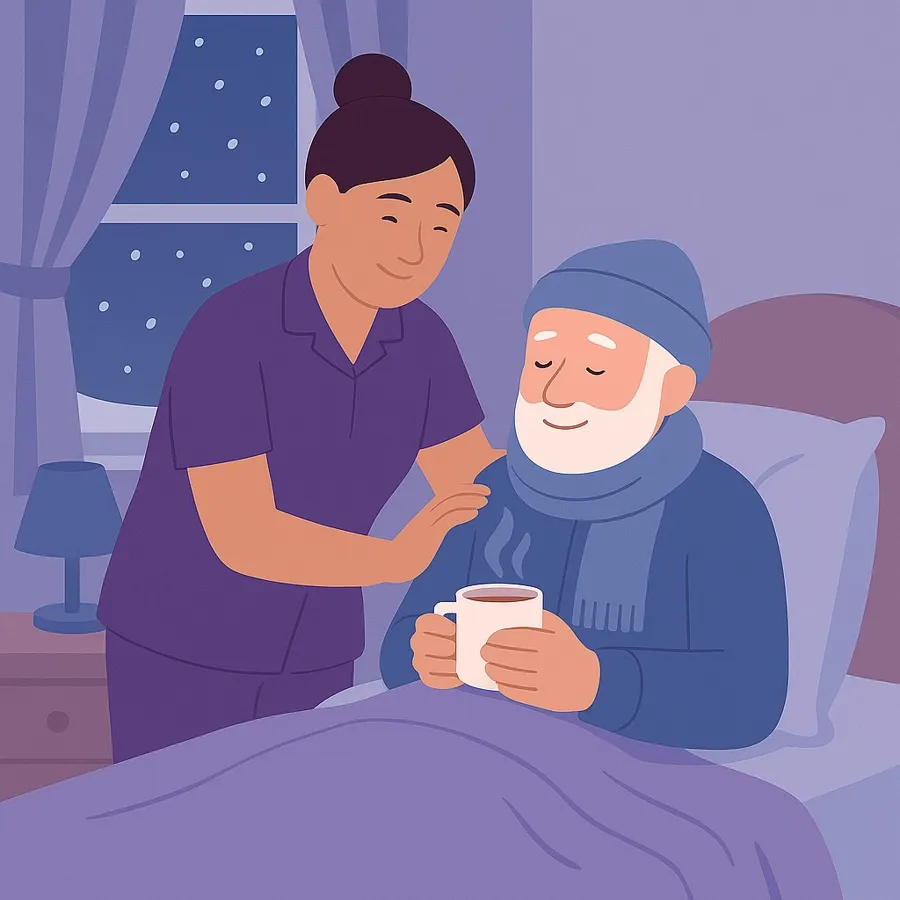
- Warmth & safety: Monitoring room temperature, layering clothing, preventing night-time falls.
- Hospital avoidance: Early action and good support often prevent deterioration.
At All About Home Care, we offer free, no-obligation care consultations to help you plan for winter—what to watch for, how to set up practical routines, and the support level that fits your family. Call 01892 575 499or explore our Care Services.
Key takeaways for families
- Vaccinate early (October is ideal) for both flu and—if eligible—COVID-19.
- Act quickly on symptoms in older or high-risk adults; early treatment can prevent severe illness.
- Watch warning signs of complications like pneumonia (breathing difficulty, confusion, chest pain, dehydration).
- Layer practical protections at home: clean air, hand hygiene, rest, hydration, and check-ins.
- Use trained support: home-care teams reduce risk by spotting problems early and coordinating help.
Need help planning for winter?
If you’d like support to keep a loved one safe and well at home, we’re here for you. Book a free care consultation with one of our Care Consultants: 01892 575 499. Read what other families say about our care on Homecare.co.uk and explore our Care Services.
Stay well, stay warm, and remember, small steps taken early make the biggest difference.
References (selected):
- UKHSA: Autumn 2025 flu vaccine eligibility and timing; Autumn 2025 COVID-19 vaccine cohorts and timings. Source
- UK Parliamentary POSTnote: Winter mortality 2025 (flu hospitalisations record levels; RSV and older adults). POST
- UKHSA: Influenza in the UK 2024–25 epidemiology (excess mortality, ICU rates). GOV.UK
- ONS: Deaths statistics and weekly bulletins (influenza/pneumonia mentions). Source
- NHS/NHS Inform: Pneumonia: risk groups, red flags and prevention. Source
- CDC evidence summary (risk by age and conditions); real-world antiviral benefit in older adults. Source
Common questions
Why do colds and flu hit older adults harder?
Immune defences and lung health often weaken with age and long-term conditions, so respiratory illnesses can become serious more quickly.
When should I seek medical advice?
Seek advice promptly if breathing becomes difficult, confusion appears, or someone is unusually drowsy or unwell.